.png?width=1387&height=800&name=Scout_Logo_RGB%20(1).png)


High-volume sites are short on time, not tools Most sites already have systems in place to manage...
5
min. read
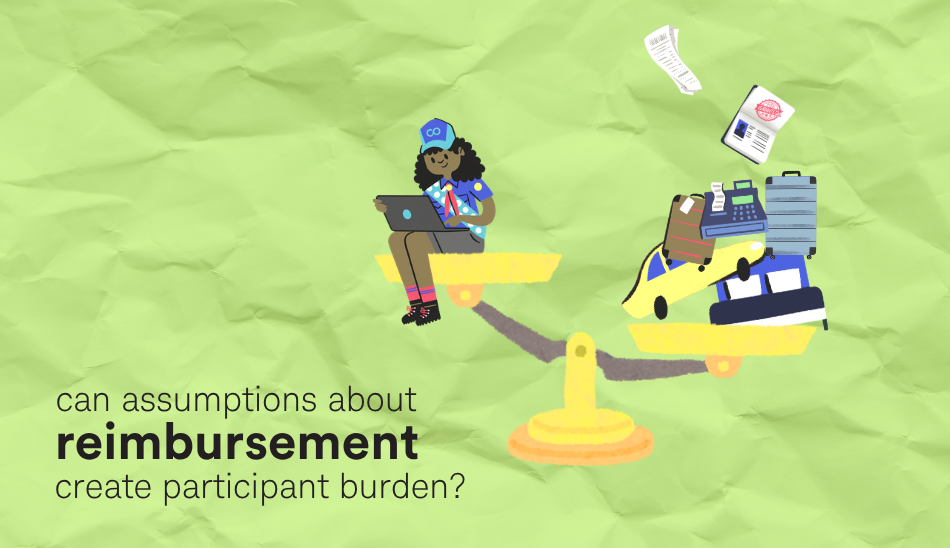
Before a participant enrolls, a clinical trial has already made decisions about what participation is expected to cost. Those decisions can shape the burden participants experience later.
Reimbursement limits, travel policies, payment timing and eligible expenses all depend on assumptions made during study planning. How far will participants travel? What will lodging cost? Will someone need to accompany them? Can participants pay expenses themselves and wait to be reimbursed?
Planning requires estimates. Problems can appear when the circumstances of the people who enroll fall outside them.
In an August 2026 report on a national survey of 1,015 U.S. cancer patients and survivors, 93% said distance to a trial location was important when considering participation. Visit frequency mattered to 92%, while 90% cited non-medical costs such as travel. Among respondents who had participated in a cancer clinical trial, 63% said they had received no sponsor financial support for transportation, lodging, food or other participation-related costs. The ACS CAN Survivor Views survey report was specific to people diagnosed with or treated for cancer, but it shows how visible practical participation costs can become.
Can reimbursement assumptions affect participant retention?
Financial and logistical burden can make continued participation harder. Reimbursement sits within a much larger retention picture, but current trial guidance recognizes its potential role.
The SPIRIT 2025 guidance on randomized trial protocols recommends planning for participant retention and identifies financial reimbursement among the measures that can help. The guidance also calls for limiting burden associated with follow-up visits and procedures.
If reimbursement is part of the retention plan, the assumptions behind reimbursement deserve attention too.
A study team may know exactly how much it has budgeted for a participant visit. A different question is whether the amount reflects what completing that visit may actually require.
What reimbursement assumptions are made during clinical trial planning?
Reimbursement policies often depend on estimates about geography, lodging costs, eligible expenses and how participants will be paid.
Some assumptions are especially useful to test before enrollment begins.
|
Planning assumption |
What participation could actually require |
|
Participants will live within the expected recruiting radius |
Longer travel because of site distribution, specialty care or actual recruiting patterns |
|
Driving will cover most transportation needs |
Airfare, rail, rideshare, accessible transportation or another arrangement |
|
Support for one traveler will be sufficient |
Travel or lodging for a parent, caregiver or necessary companion |
|
Standard lodging limits will cover appropriate accommodations |
Higher local rates, seasonal pricing or limited accessible inventory |
|
Scheduled visits capture the likely travel burden |
Repeat procedures, rescheduled appointments or other study-related travel |
|
Participants can purchase travel and submit the expense later |
Direct booking, prepayment or another option that avoids a substantial upfront expense |
|
Standard reimbursement levels will affect participants similarly |
Large differences in actual cost based on geography and individual circumstances |
|
Out-of-policy expenses will be unusual |
Legitimate situations requiring review before support can be provided |
None of these estimates has to be careless to cause a problem. A sensible planning assumption can still prove wrong for an individual participant.
How can a reasonable reimbursement policy create participant burden?
A policy can make sense at the study level while asking more of a participant than planners expected.
Consider airfare. A study may cover the full cost, yet reimbursement still requires a participant to have enough cash or available credit to purchase the ticket first.
A lodging cap based on historical rates may cover most visits. Local demand can push an appropriate hotel above that limit.
Mileage thresholds give teams a consistent rule for overnight stays. Someone living just inside the threshold may still face an impractical trip because of appointment timing, treatment effects or mobility needs.
Trial participation can also create costs beyond transportation and lodging. The National Cancer Institute identifies meals, parking, and child or elder care among the costs participants may encounter when travel is required for a study. Coverage varies by trial.
The useful planning question reaches beyond whether an expense category appears in the budget. Study teams also need to consider how the policy will work when someone actually tries to use it.
Should clinical trial participants have to pay expenses upfront?
Any reimbursement process that requires participants to spend their own money first carries an assumption about access to cash or credit.
For some participants, carrying a travel expense temporarily may present little difficulty. Others may be unable to purchase a flight or hotel room even when the study promises full repayment.
In the same ACS CAN survey cited above, 54% of respondents selected prepayment as their first choice for offsetting participation costs, while 29% preferred a stipend. Only 8% selected reimbursement first.
Scout has examined the same problem from an operational and regulatory perspective. Our article on the cost of caution in clinical trial participant support looks more closely at upfront expenses, fixed reimbursement caps and the uncertainty that can make organizations hesitant to provide reasonable support.
Payment timing deserves consideration alongside the amount available.
Current FDA guidance on payment and reimbursement to research subjects distinguishes reasonable reimbursement for travel expenses from payments for participation. FDA specifically identifies airfare, parking and lodging as travel expenses that do not raise the same undue-influence concerns as participation payments. The guidance also directs IRBs to review the amount, method and timing of payment.
What should study teams test before finalizing a reimbursement budget?
A useful review examines the assumptions underneath the numbers.
Who is the budget imagining?
Expected recruiting geography should inform expected travel. A specialized study or limited site footprint may draw participants from farther away than a standard radius suggests.
What is the participant expected to pay first?
Look for expenses that require meaningful access to cash or credit before support arrives. Full reimbursement later may still create a barrier now.
What does a study visit actually require?
The appointment itself tells only part of the story. Travel time, lodging, mobility needs and a necessary companion can change what completing a visit involves.
What happens when the policy does not fit the situation?
Some variation is inevitable. Study teams should know who reviews exceptions, what information is needed and how quickly a decision can be made.
The exception process deserves particular attention. No reimbursement model can anticipate every circumstance. How the study handles reasonable requests outside the original assumptions becomes part of the participant experience.
What can a participant support partner contribute to reimbursement planning?
A partner working directly with participant payments and travel sees what happens after reimbursement rules leave the spreadsheet.
That operational experience can expose questions that are easy to miss during planning. Actual travel requests reveal how far participants are traveling. Payment interactions show when upfront costs create difficulty. Exception requests expose places where standard policies repeatedly meet circumstances they did not anticipate.
For Scout, that perspective comes from providing participant payment and reimbursement services and coordinating clinical trial participant travel. Scout supports multiple payment methods, while its travel services can include ground and long-distance transportation, lodging and accessibility accommodations according to study policy.
That experience can help study teams ask better questions before enrollment:
- Does the recruiting footprint support the travel assumptions in the budget?
- Could payment timing require participants to carry significant expenses?
- Might caregiver or accessibility needs change the true cost of a visit?
- How will legitimate exceptions be handled?
A participant support partner does not make the sponsor's policy decisions or replace protocol and budget development. The partner can bring operational evidence into those decisions before participants have to work within them.
How can study teams reduce reimbursement-related participant burden before enrollment?
Start by treating reimbursement assumptions as assumptions.
Historical averages and standard limits can provide a useful starting point. Testing them against the protocol, expected recruiting geography and likely participant circumstances can expose places where the model deserves another look.
Payment method deserves the same scrutiny. Direct travel arrangements, prepayment or other approved options may sometimes reduce the amount a participant has to carry personally. Scout's own travel guidance notes that travel may be prepaid or directly reimbursed depending on study policy.
Study teams should also decide how exceptions will work before exceptions occur. Clear authority and a workable review process give teams somewhere to go when an appropriate expense falls outside the original model.
The budget tells a study what participation is expected to cost. Participant support reveals what participation actually costs. Looking closely at the difference before enrollment gives study teams a chance to address avoidable burden earlier.
Frequently asked questions
What expenses can clinical trial participants be reimbursed for?
Eligible expenses depend on the study. FDA guidance specifically recognizes reasonable travel costs such as airfare, parking and lodging. Participants may encounter other study-related costs, including meals or dependent care, and coverage for those expenses varies by study.
Is clinical trial reimbursement considered an incentive?
FDA distinguishes reasonable reimbursement for travel and associated costs from payment for participation. Proposed payment arrangements remain subject to appropriate IRB review.
Why does reimbursement timing matter?
Payment timing determines whether participants must carry an expense before receiving study support. An expense can be fully reimbursable while still requiring access to substantial cash or credit upfront. The preference for prepayment reported in the 2026 ACS CAN survey suggests that the sequence of payment can be meaningful to participants.